What it does
User story to test case generation translates the intent, actor, action, value, and acceptance criteria of an agile story into concrete test coverage for QA review.
Common use cases
- Prepare QA coverage during backlog refinement
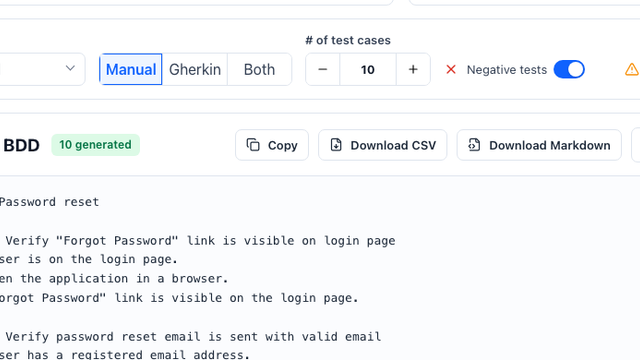
- Turn Given/When/Then acceptance criteria into manual cases
- Detect missing rules before development starts
- Create examples that product managers and testers can review together
How to use it
- Paste the user story in the As/I want/So that format
- Add acceptance criteria and business rules
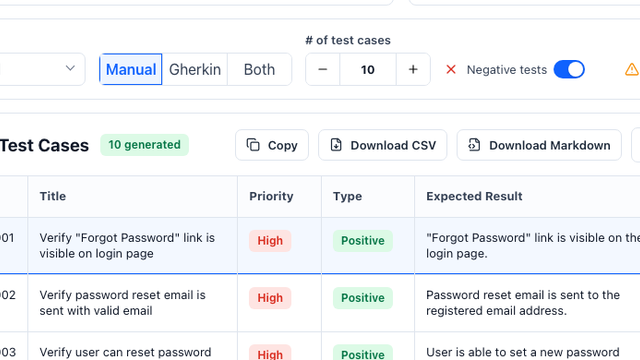
- Generate positive, negative, and edge cases
- Review whether every acceptance criterion has at least one test
Best inputs
Use clear requirements, acceptance criteria, validation rules, user roles, constraints, and examples of valid or invalid data.
How many test cases should one user story have?
Most stories need at least one positive case for each acceptance criterion plus negative and edge cases for validation rules, permissions, limits, and failure states.
Can I export generated test cases to Jira, Xray, Zephyr, or TestRail?
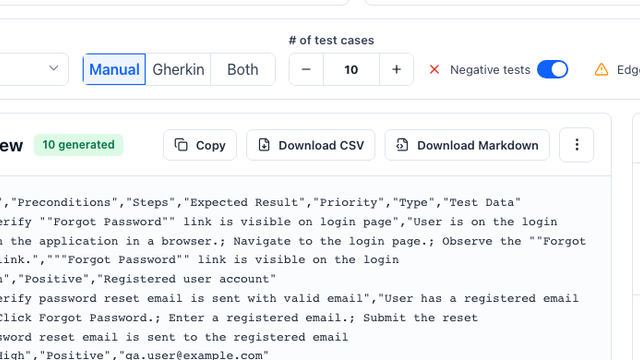
Yes. The generator can structure cases as a CSV-ready table with title, preconditions, steps, expected result, priority, type, and test data fields.
Does the tool replace QA review?
No. It accelerates first-draft coverage, but QA teams should review edge cases, business rules, and product-specific risks before importing cases.
What inputs produce the best test cases?
A clear user story, acceptance criteria, business rules, constraints, and examples of valid or invalid test data produce the strongest output.